What Is Synthetic Oil?
In brief
Synthetic oil is made from base oils that are refined and engineered much further than conventional oil. It resists heat, flows better on a cold start and stays clean longer. If your owner's manual calls for synthetic, use it. If it doesn't, full synthetic is still worth considering for heat, short trips, towing and turbocharged engines.
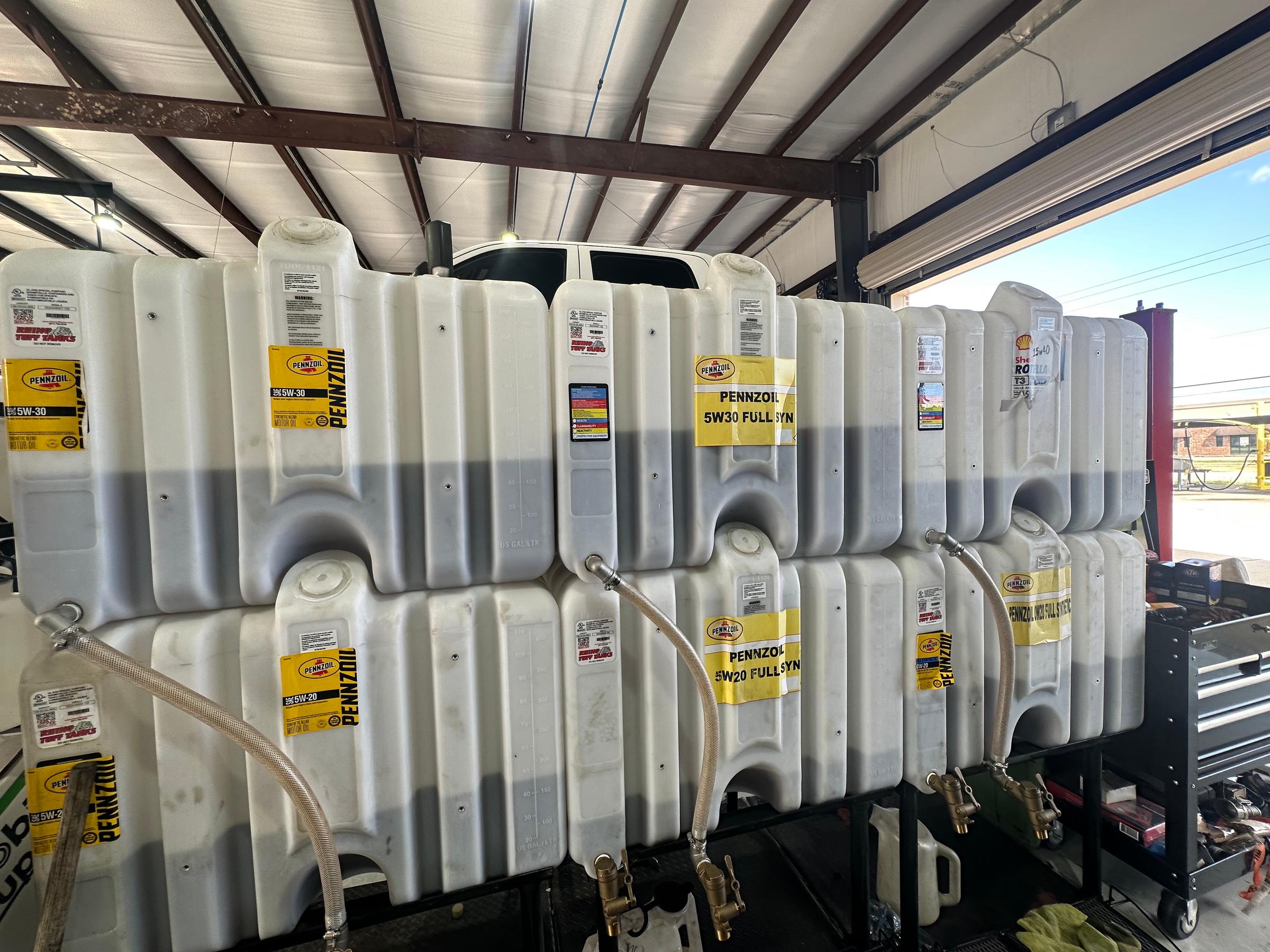
Synthetic oil is motor oil made from base oils that have been refined and chemically engineered much further than the base oil in conventional oil. The result is a more uniform, cleaner oil that resists breaking down in heat, flows faster on a cold start and keeps the engine cleaner between changes. Whether your car needs it comes down to what your owner's manual calls for and how you drive.
What synthetic oil is made of
Every motor oil is two things: a base oil, which makes up most of what's in the bottle, and an additive package that cleans, protects against wear and keeps the oil at the right thickness.
The difference between conventional and synthetic is the base oil.
- Conventional oil uses base oil refined from crude oil with traditional methods. Its molecules vary in size and shape, and it carries more of the impurities that crude oil starts with.
- Synthetic oil sold in the US usually starts as crude oil too, but it goes through much heavier processing that strips out impurities and reshapes the molecules so they're more uniform. Some synthetics are built from compounds made in a lab, such as PAO (polyalphaolefin) or esters. Both kinds can legally be sold as "synthetic."
Synthetic lubricants have been around longer than most people think. Chemists were making them in the 1930s, and synthetic motor oil for everyday cars reached US store shelves in the 1970s.
Synthetic vs conventional oil
How the two compare on the things that matter for your engine:
| Conventional oil | Full synthetic oil | |
|---|---|---|
| Heat | Breaks down and thickens faster at high temperatures | Holds up better under heat and heavy load |
| Cold starts | Flows more slowly when the engine is cold | Flows faster, so parts get oil sooner |
| Deposits and sludge | More likely to leave deposits over time | Stays cleaner and leaves fewer deposits |
| Change interval | Usually the shorter end of your manual's schedule | Often allows longer intervals, if your manual says so |
| Cost | Lowest | Highest |
A lot of engine wear happens right after a cold start, before oil has reached every moving part. That's one reason carmakers specify thin, fast-flowing synthetic oils in so many newer engines.
Synthetic is not a fix for a worn engine, and conventional oil is not bad oil. If your manual allows conventional and you change it on schedule, your engine is getting what it was designed for.
Synthetic blend vs full synthetic
A synthetic blend is a mix of synthetic and conventional base oils. There's no required ratio, so one brand's blend can have a lot more synthetic in it than another's.
A blend gives you some of the heat and cold-start benefit of synthetic for less money. It's a reasonable middle ground for a vehicle whose manual allows conventional oil but that sees some hard use, like a work truck that sits in summer traffic.
If your manual or the oil fill cap says the engine requires full synthetic, a blend is not a substitute. Use what the manual specifies.
Pro tip: Your owner's manual lists the viscosity grade (for example 0W-20 or 5W-30) and sometimes a carmaker approval, such as GM's dexos. Bring that information with you, or let us look it up by year, make and model, and you'll get the right oil the first time.
When full synthetic is worth it
When your manual requires it. This is the only case where it's not a choice. Many newer engines, especially those that use very thin grades like 0W-20 or 0W-16, are designed around synthetic oil.
Turbocharged engines. A turbo spins extremely fast and gets very hot, and the engine oil runs through it. Synthetic resists cooking into deposits inside the turbo better than conventional oil does.
Heat and stop-and-go traffic. Long summers on the Gulf Coast and slow traffic keep oil hot for long stretches. Heat is what breaks oil down, so a more heat-stable oil makes sense.
Lots of short trips. If most drives are a few miles, the engine may not get hot enough to boil off the moisture and fuel that collect in the oil. Synthetic handles that contamination better, but short trips still count as severe service, so change it on the severe schedule.
Towing and hauling. Pulling a trailer or carrying heavy loads puts more heat and stress on the oil.
Higher-mileage engines. High-mileage oils, available in synthetic and blend, include additives meant to condition older seals. They can help an engine that has started to seep a little oil.
How often to change synthetic oil
Follow your owner's manual or your car's oil life monitor. Synthetic oil often allows a longer interval than conventional, and many manufacturers that call for synthetic list intervals somewhere between 5,000 and 10,000 miles, with some going further. Most manuals also give a time limit in months, because oil ages even when the car doesn't move much.
Many manuals have a second, shorter schedule for severe service: short trips, extreme heat, towing, dusty roads and heavy stop-and-go driving. A lot of local driving fits that description, so it's worth reading which schedule applies to you.
Synthetic is not a reason to go past what the manual says. Check the oil level between changes too. Some engines use a little oil as they wear, and running low is harder on an engine than running old oil.
Switching between synthetic and conventional oil
You can switch from conventional to synthetic at any oil change. No flush or special prep is needed, and it won't harm a healthy engine.
On an older engine with worn seals, some owners notice a small leak after switching. The synthetic isn't causing the wear; it can find its way past seals that were already tired. If that happens, a high-mileage formula is usually the next thing to try.
Going back from synthetic to conventional is fine as long as your manual allows conventional oil. If it requires synthetic, stay with synthetic.
Oil changes at Texas Complete in Kemah
We change oil on gas and diesel engines, foreign and domestic, with synthetic blend or full synthetic depending on what your engine calls for. Our ASE-certified technicians will match the oil to your manual's spec, and every oil change comes with a free tunnel car wash. Current prices are $59.99 for a synthetic blend oil change and $99.99 for full synthetic.
See the details on our oil change service page, schedule your oil change online, or call us at (281) 549-4391. We're at 916 FM 518 East in Kemah.
Frequently Asked Questions
Is synthetic oil better than regular oil?
Synthetic oil holds up better in heat, flows faster on a cold start and keeps an engine cleaner than conventional oil, so it protects better under hard use. That doesn't make conventional oil wrong for every car. If your owner's manual allows conventional and you change it on schedule, it does the job. If the manual calls for synthetic, use synthetic.
How long does synthetic oil last?
It depends on your engine and how you drive, so your owner's manual or oil life monitor is the number to follow. Many manufacturers that require synthetic list intervals between 5,000 and 10,000 miles, and some go further, along with a time limit in months. Short trips, towing, heat and stop-and-go traffic call for the shorter severe-service schedule.
Can you switch from synthetic oil back to conventional oil?
Yes, as long as your owner's manual allows conventional oil for your engine. Switching back and forth does not damage the engine, and no flush is needed. If the manual says the engine requires synthetic, stay with synthetic.
Is synthetic oil made from crude oil?
Most synthetic oil sold in the US starts as crude oil, then goes through much more refining and processing than conventional oil so the molecules are cleaner and more uniform. Some synthetics are built from lab-made compounds such as PAO or esters instead. Both are allowed to be labeled synthetic.
Can you mix synthetic and conventional oil?
Yes. Motor oils that carry the API service symbol are made to be compatible with each other, so topping off with a different type won't hurt the engine. Mixing does dilute the benefits of the synthetic, so go back to the oil your engine calls for at the next change.